

1.Pipeline Maintenance & Emergency Repair
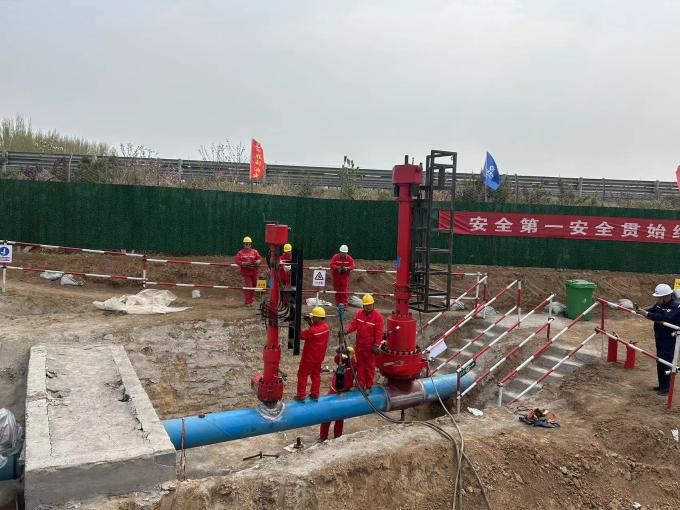
1. Hot Tapping
Pipeline Hot Tapping is a technique for safely creating an opening on an operating pipeline or vessel. It is suitable for routine maintenance, modification, and emergency repair of pipelines carrying various media, including water, crude oil, refined products, chemicals, and natural gas. This technology is safe, environmentally friendly, cost-effective, and highly efficient, requiring no pipeline shutdown and thus avoiding disruption to production and supply.
Key Feature: Can be performed while the pipeline is under pressure and in operation.
Applications:
Pipelines with flammable/explosive media
Pipelines with inert materials
High-pressure steam lines
Operating Parameters:
Temperature: Up to ≤ 300°C
Pressure: Up to ≤ 10.0 MPa
Suitable Pipelines:
Materials: Various steel, PE, concrete pipes, etc.
Diameter Range: Φ32 mm ~ Φ2000 mm
Tapping Methods: Hydraulic or manual operation.
Tapping Orientations:
1). Vertical tapping
2). Tapping on fittings/clamps
3). Angled tapping
4). Inverted tapping
5). Tank nozzle installation

2. Pressure Plugging
This process is primarily used for repair, emergency response, section replacement, and station modification of pressurized, in-service pipelines.
Plugging Types:
1). By Mechanism: Stopple (Hanging) Plugging, Cylinder (Sleeve) Plugging, Folding Head Plugging, Inflatable (Bag) Plugging, etc.
2). By Flow State: Shutdown Plugging and Non-Shutdown (Live) Plugging.
3). By Configuration: Various setups like Single Block, Double Block and Bleed, or Four-Way Isolation can be deployed based on site requirements.
Operating Conditions:
Pipe Size & Material: Steel, cast iron, ductile iron, PE/PVC pipes from DN25 to DN2600.
Conveyed Media: Refined oil, natural gas, water, ethylene, coal gas, medium oil, jet fuel, and other non-highly-corrosive media.
Media Temperature: -30°C to +250°C
Media Pressure: 0 to 6 MPa
Note: Customized plugging solutions are available for high-temperature, high-pressure, or complex media.


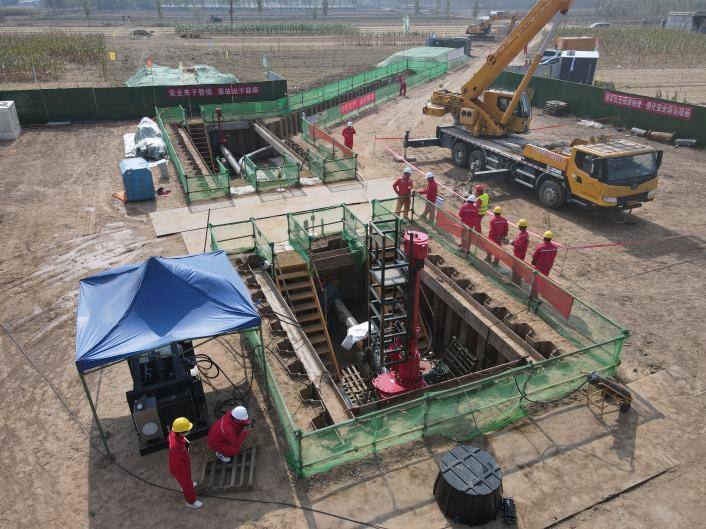
3. Pipeline Plugging Technology – Stopple Plugging
Stopple Plugging uses a cylindrical milling cutter with cutting teeth on one end, connected to a tapping machine, to cut a saddle-shaped hole in the pipeline. A round, rubber sealing plug is then inserted into the pipe center. Through radial, elastic, and plastic deformation of the plug, a tight seal is achieved, blocking the flow across the pipe section.
Key Features: Tight seal, high-pressure capability, fast execution.
Applications: Ideal for emergency repairs on long-distance, pressurized pipelines carrying oil, natural gas, and refined products.


4. Pipeline Plugging Technology – Folding Head Plugging
Folding Head Plugging utilizes a collapsible plugging head mechanism, allowing a large-diameter pipe to be isolated through a relatively small tapping hole. This significantly reduces preparatory work and increases operational efficiency.
Key Features: Particularly suitable for low-pressure, large-diameter pipes and confined workspaces.
Typical Applications: Plugging of large-diameter water and gas mains.


5. Pipeline Plugging Technology – Cylinder (Inflatable Sleeve) Plugging
The principle involves first cutting through the entire target pipe using a hot tapping machine. An inflatable sealing sleeve is then fed through this cut into the center of the pipeline via a plugging device. An integrated actuator expands the sleeve to seal against the pipe wall and block the medium.
Key Advantage: Since the plugging is performed after a full-bore cut, the effectiveness of the seal is not compromised by pipe ovality or internal debris, ensuring high reliability.


Previous Page
Previous Page